


This guide helps HR professionals apply the SCARF model (Status, Certainty, Autonomy, Relatedness, and Fairness) to anticipate and address social and emotional triggers in stakeholder interactions. It provides practical tools for preparing for sensitive conversations, collaboration, and change initiatives with greater empathy, clarity, and influence.
Included in this resource:
- Introduction to the SCARF model and its five domains: status, certainty, autonomy, relatedness, and fairness
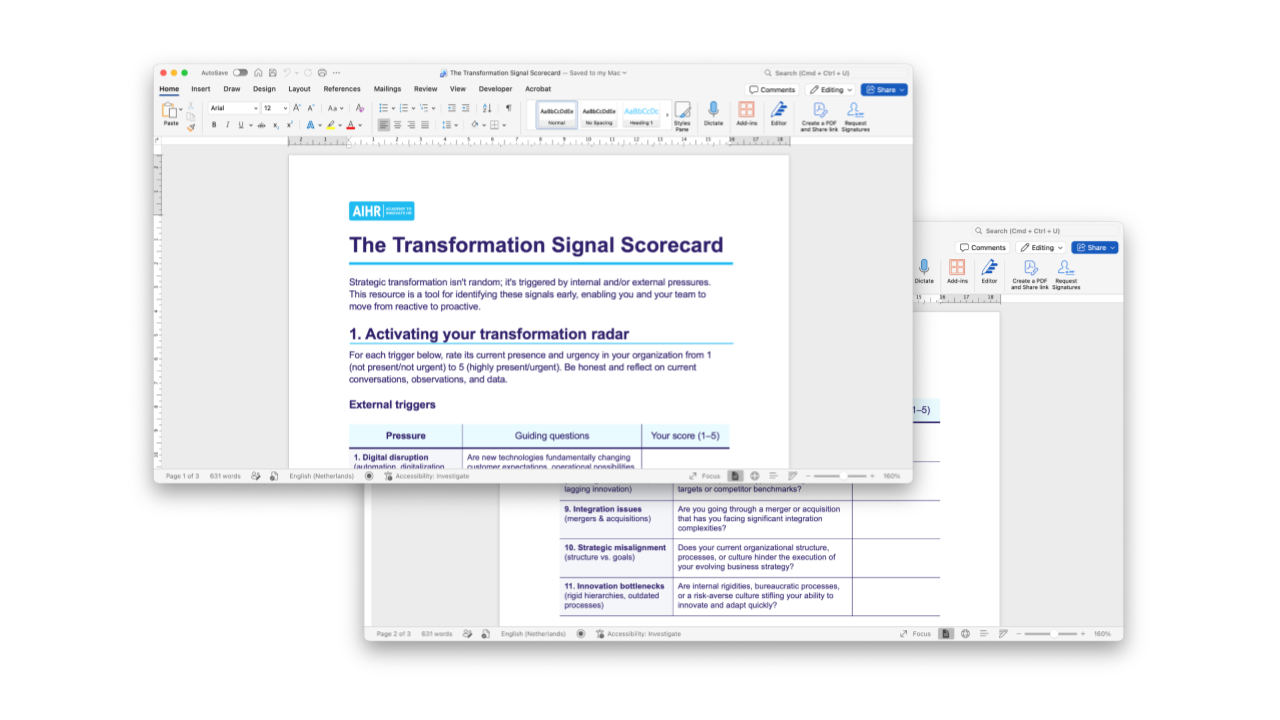
- SCARF analysis tool outlining common risk signals, mitigation tactics, and tailored language or actions for each domain
- Practical examples of phrases and responses that can be used when specific SCARF-related risks emerge
- Reflection prompts for assessing how an individual stakeholder may respond across all five SCARF domains
- Stakeholder planning template for documenting risk signals, mitigation tactics, and a tailored language or action plan for a specific stakeholder